
Guide
Online or line-interactive?
The topology decision comes before capacity, because it determines what the load experiences at the moment the supply fails.

What a line-interactive UPS does.
In normal operation the load runs on mains, corrected by an automatic voltage regulator that trims sags and swells without touching the battery. When the supply fails, the inverter takes over — a break of 3–8ms on Aurora III. Efficiency in this mode is high, around 95%, because the power is not being converted twice.
What an online UPS does.
Incoming AC is rectified to DC and rebuilt by the inverter continuously. The load never sees raw mains: it sees a regenerated pure sine wave at ±1% regulation. Because the inverter is always running, transfer to battery takes 0ms — there is nothing to switch.
Side by side
The two topologies compared
Every value below is taken from the datasheet figures in the product data — Aurora III for line-interactive, Infinity Series 1–3KVA for online.
Swipe horizontally to compare both topologies.
| Specification | Line-interactive | Online double-conversion |
|---|---|---|
| Output waveform | Modified sine wave | Pure sine wave |
| Transfer time | 3–8 ms | 0 ms |
| Output power factor | 0.5 – 0.6 | 0.9 |
| Peak efficiency | 95% (line mode) | 91% (inverter) |
| Certification | CE | CE |
The decision usually comes down to three questions.
- Can the load tolerate 3–8ms?
- Most PCs, monitors and networking gear can. Some PLCs, medical devices and legacy controllers cannot.
- Is the incoming supply clean?
- Persistent distortion, frequency drift or generator supply argue for double-conversion, which isolates the load from all of it.
- Does the equipment demand a true sine wave?
- APFC power supplies, transformer-input equipment and many clinical instruments do. Aurora III's modified sine wave suits general office equipment; anything sensitive belongs on the online series.
Where each fits in the range.
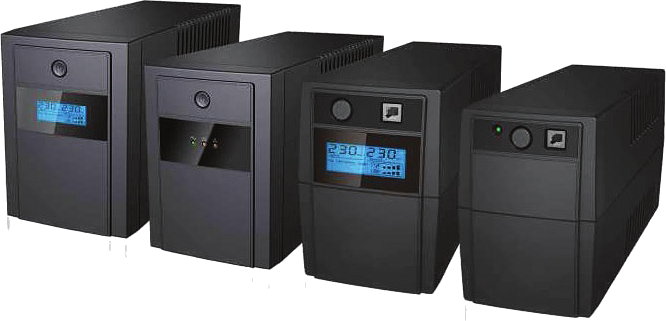
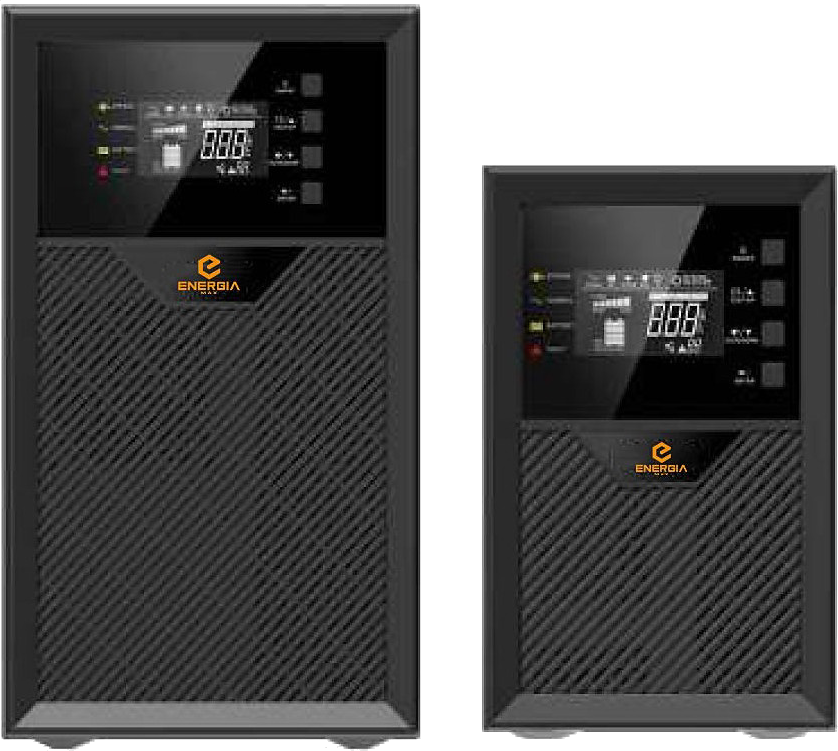
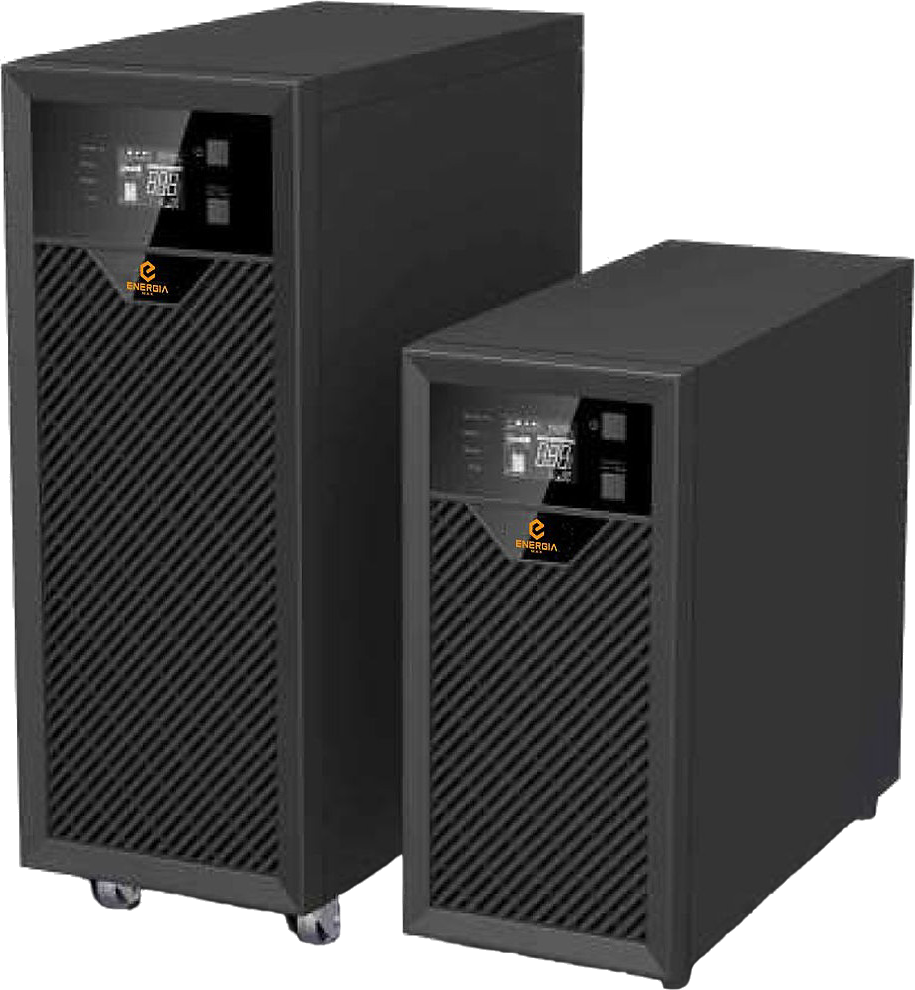
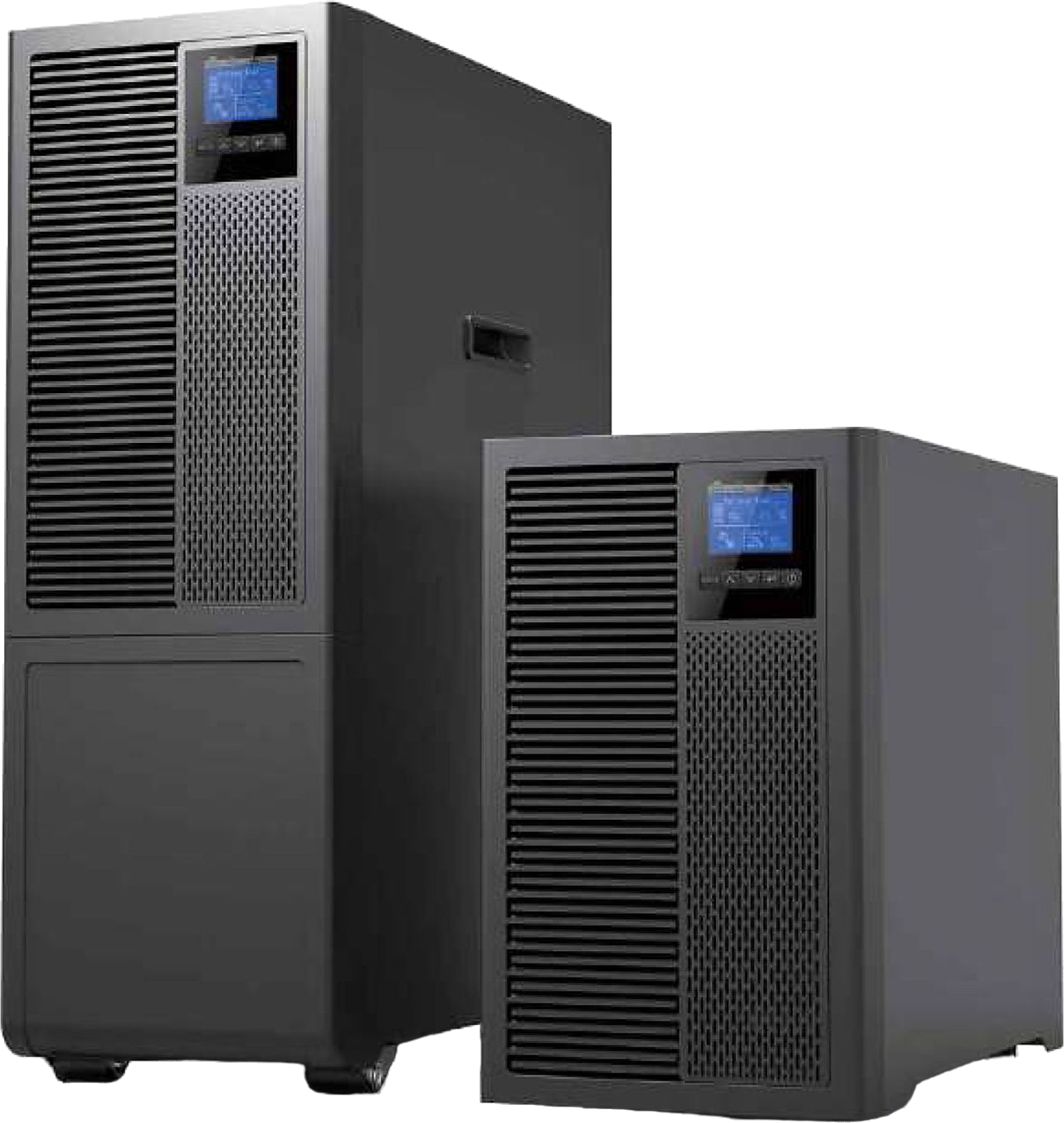
Aurora III, 650VA–2200VA, line-interactive with AVR: workstations, tills, routers, AV racks. Infinity Series, 1KVA–10KVA, online: comms rooms, clinical equipment, server rooms, telecom cabinets. Optima Series, 6KVA–10KVA, online with unity power factor: critical loads where every watt of the nameplate is needed.
- Aurora III650VA – 2200VA
- Infinity Series 1–3KVA1KVA – 3KVA
- Infinity Series 6–10KVA6KVA – 10KVA
- Optima Series 6–10KVA6KVA – 10KVA


On efficiency and running cost.
Double-conversion has historically cost more to run. That gap has narrowed: Infinity 6–10KVA reaches 94% in full double-conversion and 98% in ECO mode, and Optima Series reaches 95% inverter efficiency. ECO mode is the compromise position — near line-interactive efficiency with a fast route back to full protection.
Not sure which applies to your load? Ask us.
Describe the equipment and the supply, and we will tell you which topology the load actually needs.